By John Ndegwa / BMA
Kenya is intensifying efforts to build a robust national and global capacity for Maritime Domain Awareness (MDA).
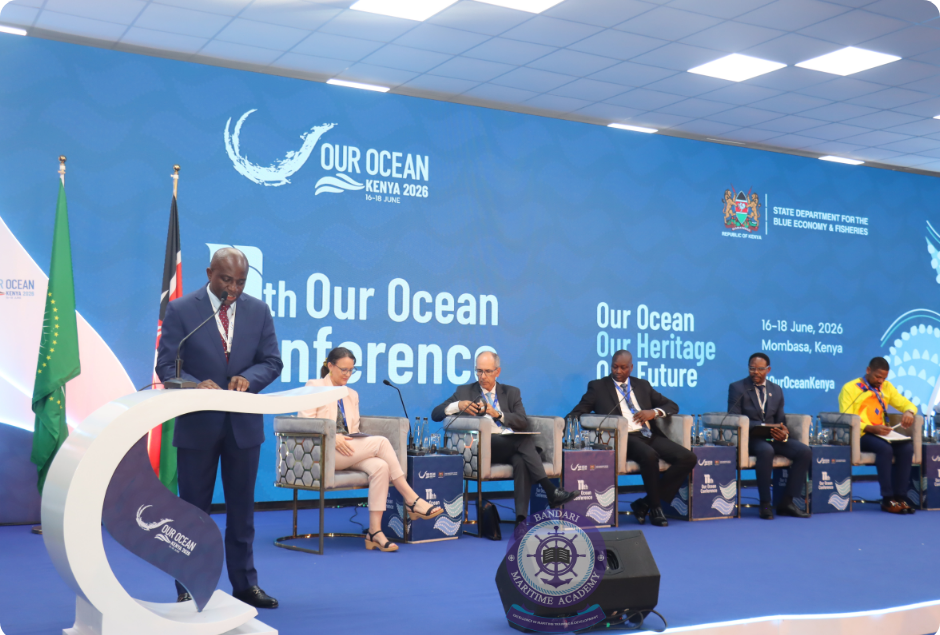
In a key note address delivered by Bandari Maritime Academy CEO Dr Eric Katana on behalf of the Cabinet Secretary for Mining, Blue Economy and Maritime Affairs Ali Hassan Joho during a side event in the ongoing Our Ocean Conference 2026, said this was a strategic move aimed at enhancing maritime security, protecting marine resources, and strengthening the country’s position as a regional maritime hub.

Dr. Katana also noted that Kenya remain critical in the Maritime sector since it has approximately 600 kilometres of coastline along the Western Indian Ocean and a vast Exclusive Economic Zone (EEZ).
Further Dr. Katana read that the Maritime sector contributes over $4 billion annually, the sector supports millions of livelihoods through fisheries, trade, tourism and port operations in Mombasa and Lamu, while also underpinning national security and environmental sustainability.
Recognizing the sector’s importance, stakeholders are prioritizing effective monitoring and understanding of maritime activities to mitigate risks that could disrupt trade, compromise safety, or harm the environment. Disruptions in maritime operations, experts note, could have far-reaching consequences not only for Kenya but also for the wider East and Central African region.
MDA plays a central role in addressing these challenges. It enhances Kenya’s ability to detect, prevent, and respond to maritime threats such as piracy, armed robbery at sea, drug trafficking, arms smuggling, and human trafficking. Although piracy incidents have significantly declined, authorities emphasize the need for sustained vigilance through early warning systems and coordinated response mechanisms.
Dr. Katana in the speech noted that beyond security, MDA is crucial in environmental protection. It enables real-time monitoring of illegal dumping, ship-based pollution and rapid response to maritime incidents such as oil spills ensuring the sustainability of Kenya’s marine ecosystems and coastal economy.
Kenya is currently transitioning from what experts describe as “sea-blindness” to “sea-vision,” a shift that reflects a more proactive and intelligence-driven approach to maritime governance. This transformation is being driven through a combination of national initiatives, regional collaboration and global partnerships.
In the speech, Dr. Katana noted efforts are underway to operationalize the National Maritime Information Sharing Centre (NMISC) in Mombasa. The centre is expected to enhance inter-agency coordination among key institutions including maritime authorities, port authorities, the coastguard, customs, and the navy. Authorities are also investing in advanced technologies, strengthening personnel capacity, and improving governance frameworks to effectively address emerging maritime threats.

Equally important is the push to break down institutional silos and promote greater collaboration among agencies, ensuring a unified and efficient response to maritime challenges.
Regionally, Kenya is deepening cooperation with partners across the Western Indian Ocean to improve information sharing and collective security. This collaborative approach is expected to reinforce safe navigation, protect marine resources, and sustain economic growth tied to maritime activities.
As Kenya continues to advance its Maritime Domain Awareness strategy, the country is positioning itself as a leader in maritime security and blue economy development reinforcing its role as a gateway for regional and global trade.